
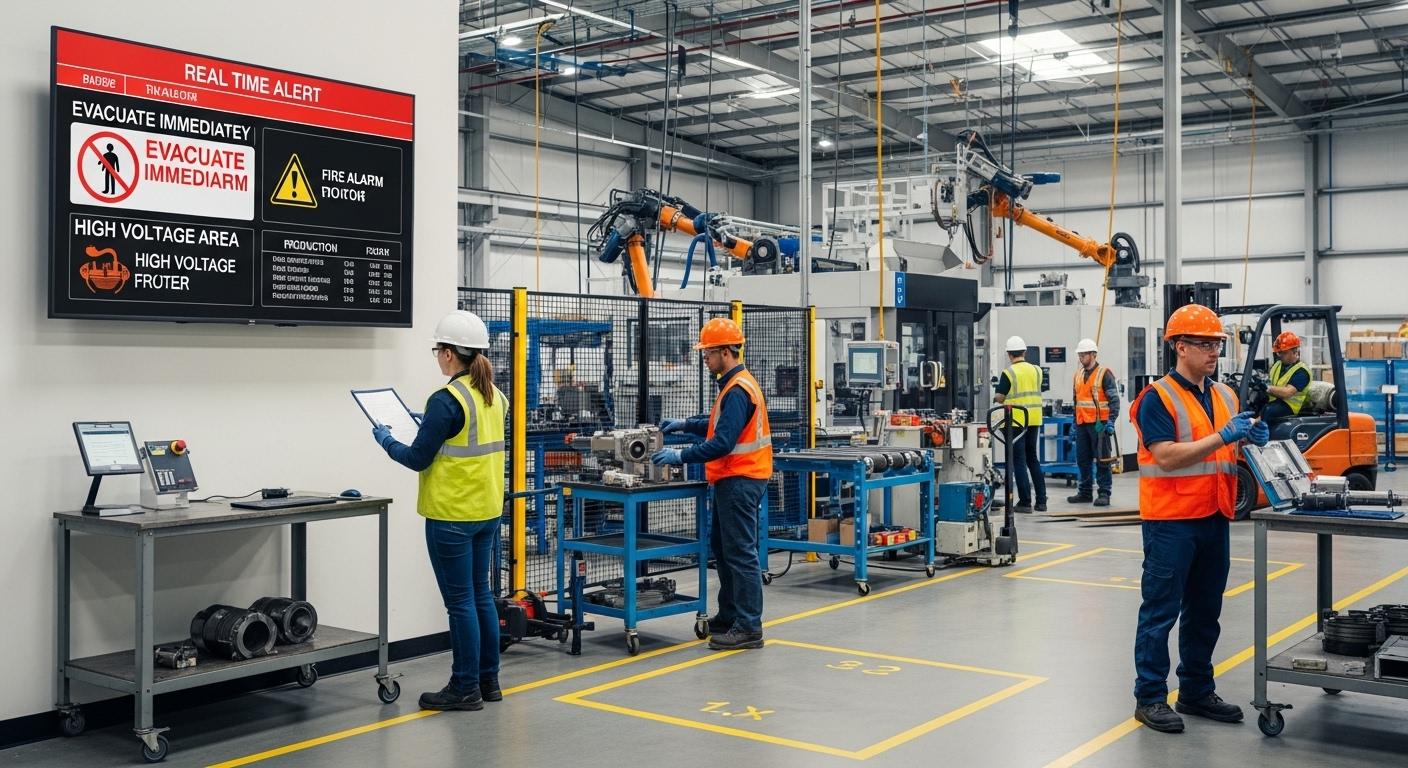
Lights pulse, signs flash, safety surges through corridors and over machines, no phone needed, no desperate shouts echoing, staff glance up, the meaning lands at once, nerves steadied by visible guidance. When sudden alerts jump out across the site, digital signage for real-time safety messages shapes reactions before stress takes root. Some think chaos rules the factory floor, the hospital ward, the distribution center; clarity takes over, transforming anxiety into determination in the space of seconds.
The power of real-time site alert digital signage in modern workplaces
Few notice the system until crisis knocks, then everyone trusts the alert—no one doubts, no one hesitates, screens do their silent work amid the roar. Modern workplace safety? It depends less on shouting, more on technology that connects every sensor, every access badge, every person, from the warehouse shadow corners to the nurse’s station where urgency never sleeps. Emerging platforms for real-time alerts on digital signs have reshaped communication expectations across industrial sectors.
In the same genre : Seamless audio translation into over 50 languages for all
Forget the old reliance on radios or runners—cohesive alert systems, led by real-time digital signage, break through barriers that held communication hostage to chance.
The concept of real-time safety messaging
One screen can cover a plant, or a thousand displays span a whole enterprise, but the result matches: people move at the same time, guided by information from sensors, alarms, and scheduling software. Alertus and OnSolve, among leaders, have embedded their systems since 2026 everywhere people juggle risk—warehouses, stadiums, hospital passageways—so no one misses the signal.
Also to see : Mastering Crisis Communication: A Foolproof Strategy for Swansea’s Hospitality Sector
These connected displays link seamlessly with fire alarms, chemical sensors, even HVAC status, so when something turns dangerous, or simply needs attention, the message never gets lost in background noise. It lands straight in everyone’s sightline. Daily operations also benefit—not every alert concerns a raging fire or toxic cloud, sometimes it concerns a missing visitor, a misrouted delivery, maintenance preventing a breakdown. Workplace digital signage for real-time alerts never sleeps, maintaining a living web of communication between device, data, and decision.
The safety challenges addressed by digital signage
Real risks ignore polite warnings, they strike and demand reaction, not confusion. Loud machinery, shifting teams, new faces moving through the halls—shouted warnings vanish, conflicting messages breed panic, and time, precious time, slips away. Ever stood unsure, two alarms bickering, uncertainty blooming in the confusion? Digital signage for real-time site alerts repairs these gaps, shaving minutes off evacuation times, providing clear step-by-step guides rather than cryptic buzzwords, shrinking panic and injury rates.
Try picturing a crowded loading bay, forklifts weaving, operators masked and focused, suddenly every head turns to the same message, the same instant. Reassurance replaces fear. No reason to gamble with confusion when reliable digital safety messages fill the workspace with assurance and unity.
The tangible benefits of real-time workplace notification systems
What shifts when old manual alerts give way to instant digital signage? Visible gains—faster movement, clearer understanding, compliance so smooth it feels invisible—reshape the daily landscape. Skeptics compare before and after, they don’t return to the old ways.
The impact on emergency response from digital alert signage
Concrete differences spring up: seconds shaved from response times, staff confidence jumping, audit logs no longer lost in the paperwork void. Numbers speak where anecdotes fade.
| Metric | Manual Alerts pre-2026 | Digital Alert Signage 2026 |
|---|---|---|
| Average Response Time | 4–7 minutes | 1–2 minutes |
| Instruction Clarity | 50 percent unsure | 90 percent report clarity |
| Regulatory Compliance | Incomplete paper logs | Automatic digital logs |
| Panic Injury Rate | 5–7 percent in full evacuations | 2 percent or less, OSHA data |
The difference isn’t just felt—according to OSHA’s trends, facilities investing in real-time notification displays meet compliance faster, often with digital records ready for inspection at a moment’s notice. Staff see the information and act without hesitation.
Legal responsibility and safety no longer compete—they walk together, secured by logs and confirmed by immediate reaction across all floors.
The real-time communication edge for routine and crisis
Mobile phones forget themselves at breaks, radios gather dust when hands get full. But alerts via digital site displays speak across shifts, over languages, without counting on personal electronics. Sudden alert? New safety update? No one stands apart—everyone learns the rules in time, even wandering visitors unaffiliated with the regular team.
Clarity on the display slices through distraction. The right message shows up in the right place, never waiting for a rumor chain or a phone call to spread urgency. Watch drill times drop, confusion shrink. Drills turn from guessing games into synchronized choreography—a few seconds better, each time. This is no lucky accident, just smart, visible communication stepping up to the job.
The effect on compliance and simplified audit trails
Messages log themselves, records grow thorough, and compliance headaches start to fade. Digital signage proves its worth not only during incidents, but long after, in records that clarify every alert, from test runs to serious emergencies. Insurance companies, regulatory officers, and factory managers finally speak the same language: certainty. Nothing gets scribbled and lost, nothing forgotten during audit season.
| Audit Type | Information Logged | Benefit |
|---|---|---|
| Alert History | Time-stamped message, audience shown | Full compliance at a glance |
| Response Metrics | Evacuation paths, reactions | Incident analysis improved |
| Maintenance Records | Routine logs | Easy technical review |
| Insurance Claims | Incident logs per notification | Speeds documentation |
Workplace digital signage for real-time notifications turns red tape to confetti—records line up, compliance settles in comfortably, all with a couple of clicks if questions arise months later.
The underlying technology and features of safety digital signage
Display boards no longer wait silent in isolation, they sync across the safety net—a blend of sensors, alarms, locks, and environmental monitors. The result looks seamless, but underneath, APIs churn, talking fluently with dusty legacy panels and shiny new IoT gadgets alike. The system scales, adapts, never needing major surgery to grow—one monitor or thousands, strains never show.
The integration of smart digital signage with safety systems
Why does this matter? Fire alarms trigger messages, doors secure the danger zone, even a temperature ghosting upward can send a warning before a technician notices. Human resources data connects, guest badges get flagged, automatic scripts issue safety reminders or clear entire wings for the approaching threat. Old and new equipment mesh in conversation, translating old signals into modern displays with no manual effort, just seamless handoffs and clear output. For the user, it’s simple—a glance tells the whole story.
The customization and accessibility built into 2026 systems
Icons leap out, colors shift, spoken options double the coverage. Facilities where English fractures into a dozen dialects switch displays to any needed language, a manager switching layouts or urgency from a dashboard miles away. Accessibility isn’t a postscript, it’s a hallmark—everyone receives, everyone processes, nobody sidelined by unreadable jargon or clashing colors.
Not only words but cues—sound, flashing borders, big icons—mean nobody must guess. Timing, placement, and message style adjust with a click. Local quirks, corporate standards, disability access, all accounted for in setups tested from Boston to Bangalore. Real-time safety digital signage grows more adaptable, more tuned to real people every year.
- Immediate alerts reduce panic and decision mistakes among staff, even during off-hours shifts
- Automated logging ensures regulatory compliance audits do not disrupt daily workflows
- Flexible display technology accommodates all team members, whatever their language or role
The industry success stories and best practices for digital alert rollout
Every sector tailors solutions, but patterns emerge—industrial plants cut incident rates after gas leaks, schools log faster lockdown times, clinics tighten hygiene adherence with messages blaring outside patient rooms. Factories, hospitals, event venues—all swap chaos for coordination as real-time alert signage settles nerves and focuses energy on the right moves.
The best way to deploy real-time site alert digital signage?
No one copies a template, risks and people don’t fit one mold. Step one means mapping hazards, traffic, and communication gaps; step two, choosing modular signage platforms that scale with new facilities and challenges. Training matters just as much—teams practice with live drills, offer feedback, adapt layouts on the go.
Effective systems pair tailored tech with regular engagement; complacency, with today’s stakes, endangers everyone in the building.
A story that still gets retold: jittery hands, trembling radios, the first evacuation signal lighting up every screen in a Midwestern plant. One gasp, then, unexpectedly, a smile—a relief. Stella, safety manager, says it best, Now the whole team sees what I see. That first success starts a trend—drills sharpen, confidence grows, the slowest team members catch up and the anxiety fades, replaced by quiet pride and faster feet every quarter.
Those who cling to last year’s habits let confusion take charge in the next crisis. Those who step forward, embracing visible, connected alert systems, own that single chance to protect, inform, and calm—long before panic or rumor has a chance.